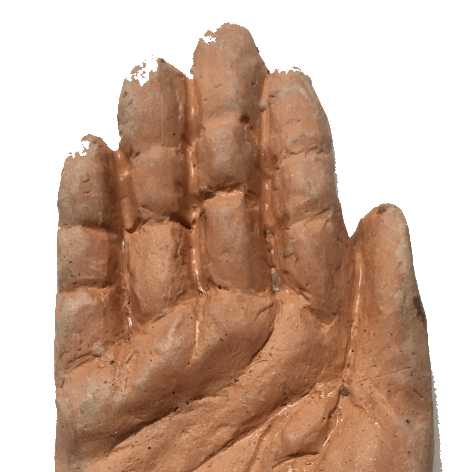
Paris – Pere Lachaise Cimetery
GPS Coordinates 48.859255 N 2.393787 E – Performance #5

Not far from the Eiffel Tower and the bustling streets of Paris lies an eternal resting place for Jim Morrison and Allan Kardec. The presence of the lucky hand is particularly fitting in this location.
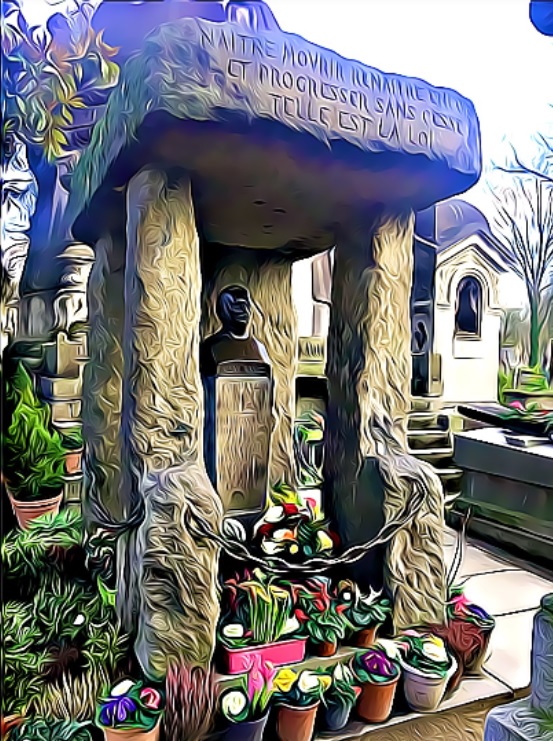
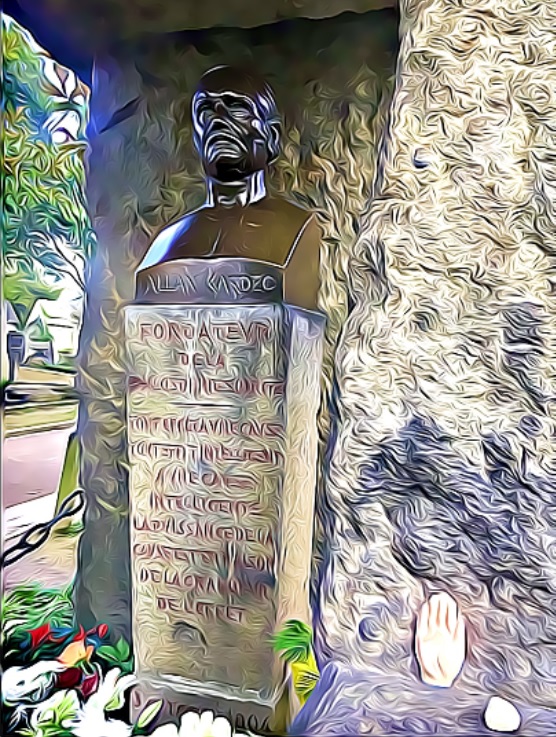
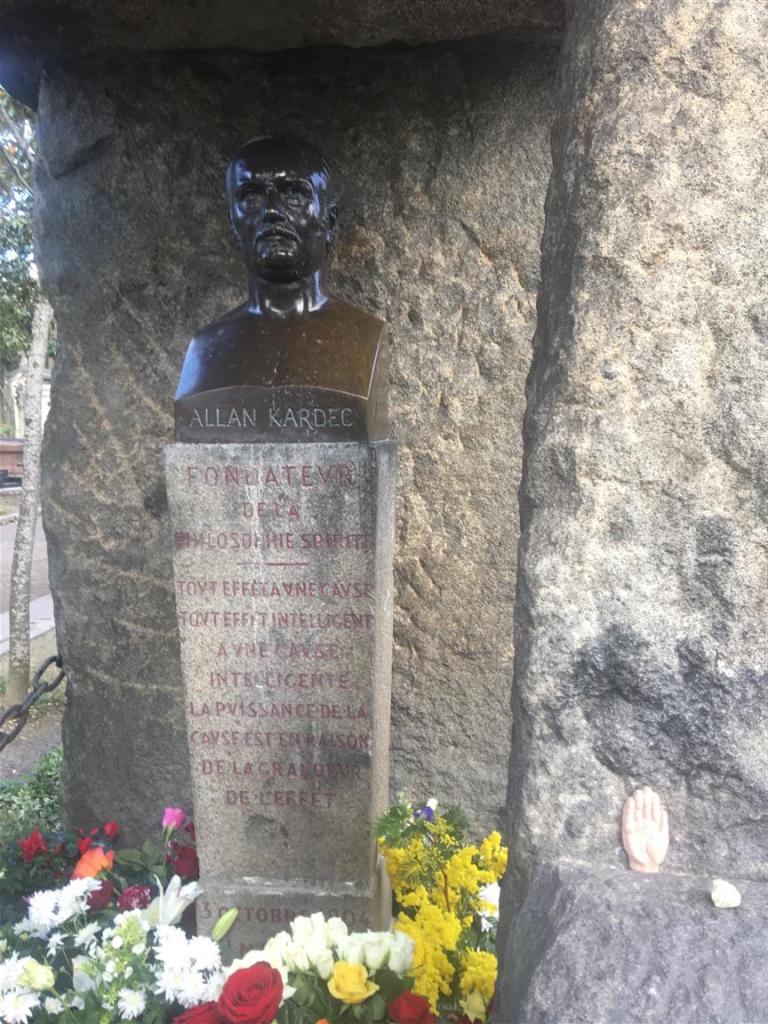
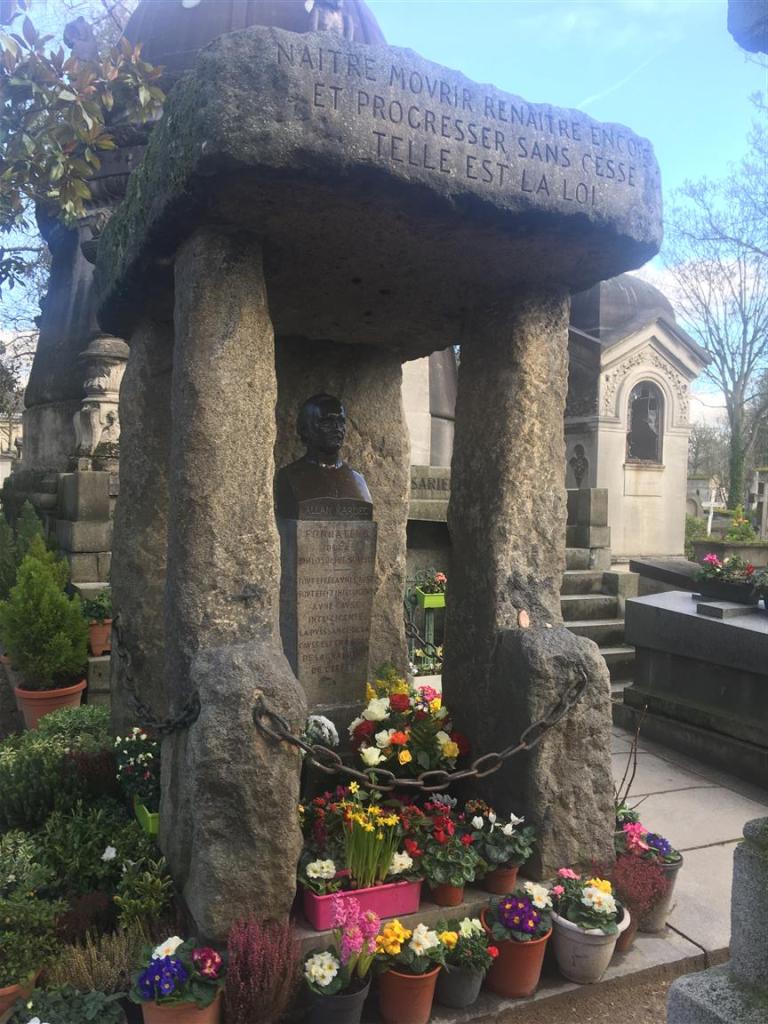
Allan Kardec, the founder of spiritualism, continues to exert a strong influence on Brazilian culture and public life. Engraved on the frontispiece above his dolmen-shaped tomb and beneath his polished bronze bust sculpted by Paul-Gabriel Capellaro are the fundamental principles of the doctrine: “To be born, to die, to be reborn, and to progress without ceasing, that is the Law.” On the stele supporting the bust, one finds the inscription: “Every effect has a cause; every intelligent effect has an intelligent cause; the power of the cause is proportional to the magnitude of the effect.” Mediums often seek inspiration at the bust of Allan Kardec, believed to have the ability to grant various wishes. It is in this sacred space that a lucky hand now finds its place.
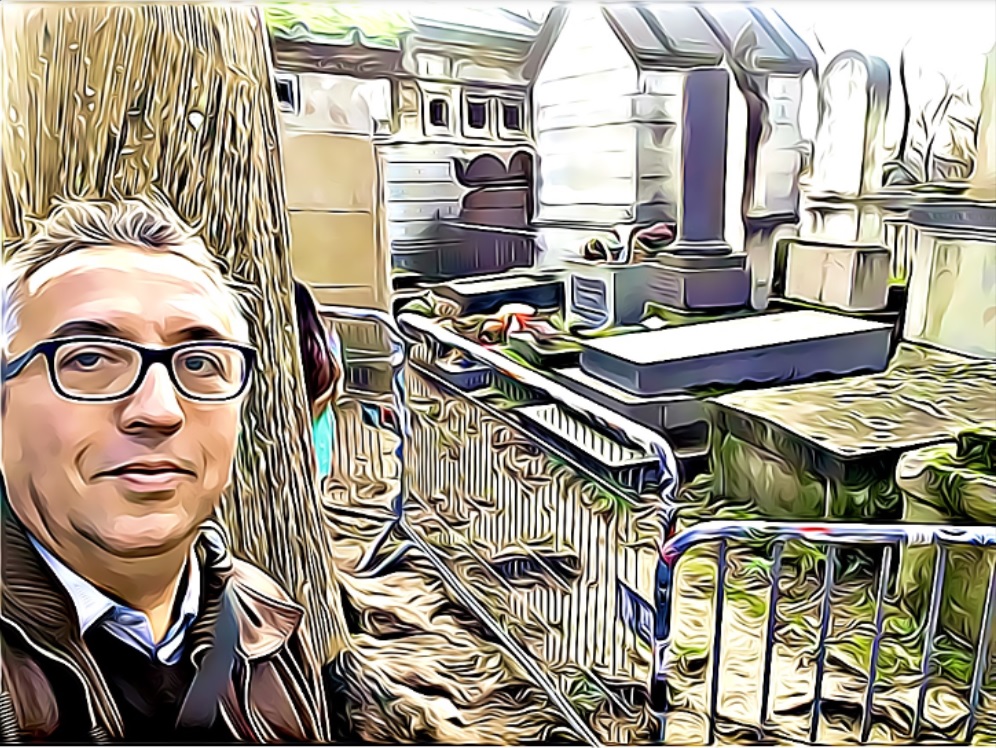
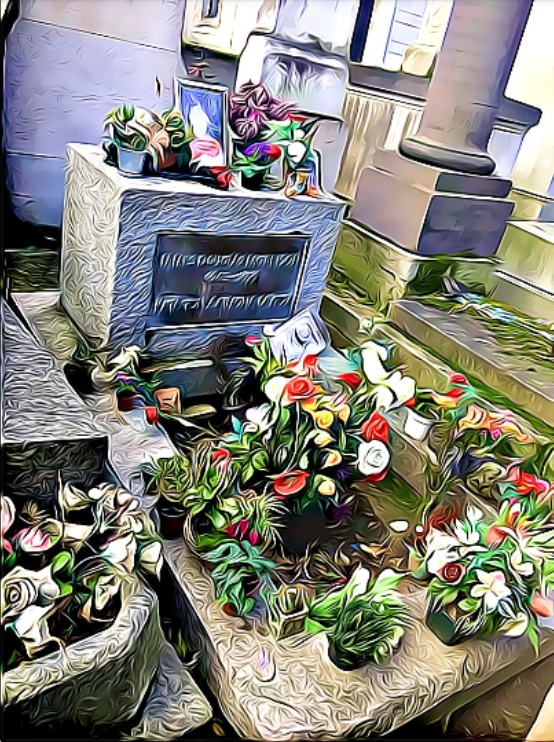
Jim Morrison (James Douglas Morrison), the celebrated musician, songwriter, and poet, best known as the lead vocalist of the rock band The Doors, left behind a legacy that extended beyond his musical contributions. His untimely death prompted his family to choose an inscription that would encapsulate his essence. Despite Morrison’s fame as a lyricist, the chosen phrase, “KATA TON DAIMONA EAUTOU,” is in ancient Greek, a language not directly associated with him. This decision raises questions about interpretation, particularly regarding the word “daimon,” which carries various meanings, including “spirit” or “demon.” The epitaph’s creation involved Rear Admiral George Stephen Morrison, Jim’s father, who sought guidance from E. N. Genovese, a professor of Classics. The final inscription reflects a fusion of ideas, with Genovese ultimately crafting the phrase based on GSM’s initial concept. However, the choice of “daimon” invites interpretation, as it holds different connotations in ancient Greek literature and the New Testament. The complex narrative sheds light on the intricate process of memorializing a loved one, highlighting the interplay between personal meaning and public perception. Now, a lucky hand has been placed upon it.


 WiserTouch